The month has ended. The sales were strong, the P&L shows a profit and there is nothing seriously incorrect.
Then you check the bank account of the restaurant.
The number you received isn’t what you expected.
Restaurant owners, this gap can be frustrating as profits and cash flow appear to be the same. They aren’t. A P&L is a measure of financial performance over a period in time, whereas your bank account shows the time frame of money going into and out the business.
Understanding the difference could alter the way a restaurant owner considers restaurant financials.
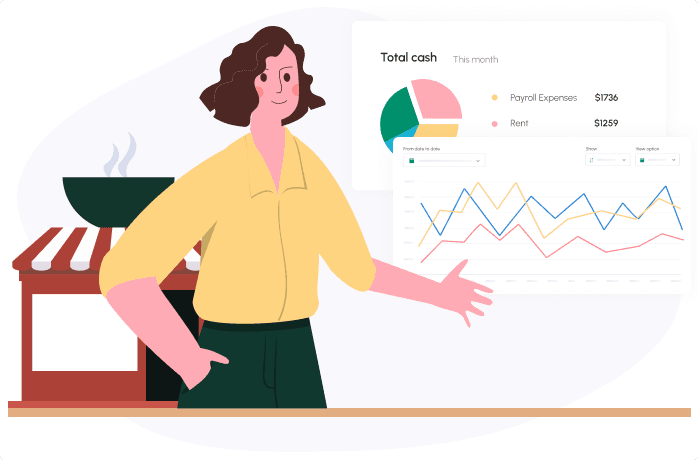
Imagine what could happen on the typical week. The customers pay for food. Employees have to be paid. Invoices for food and beverages are handed out. Rent is on the verge of being due. The credit card deposit is also timed. Taxes on sales have been paid, but that cash has a responsibility.
Already the shopping spree for next week have started.
Concentrating on revenue or the end-of-year profit number misses much of that activity.
The answer could be hidden in prime cost
If restaurant profits begin to fall, cost of food, beverages and labour expenses should be taken into the equation.
Together, cost of goods sold and the labor cost together make up the bulk of the cost. Bookkeeping Chef’s supplied guidance places prime cost at roughly 60% to 65 percent of the total revenue for many establishments, and emphasizes regular monitoring instead of waiting until the close of the month.
Effective primary cost management is less about focusing on one percentage point and more about being able to spot changes early.
Imagine that the restaurant normally does well, but this week, there’s more of a percentage. Perhaps overtime was increased. Perhaps, the costs for beverages remained constant while food costs jumped. The operator may review menus and portions, waste, vendor invoices, and purchasing if the proportion of food is higher.
The percent raises the issue. It is in the underlying restaurant activity.
This is possible due to the fact that everyone is able to recall what happened.
After two or three weeks, it becomes much harder to reconstruct the specifics.
The Vendor’s bills arrive
Restaurants may buy ingredients this week but pay for the items later. This is a reason for understanding profit alone doesn’t answer every cash question.
Vendor invoices need to be recorded, received, tracked, and ultimately paid. The manual process of completing this task in an environment with many suppliers can result in a significant administrative burden.
Automating the process of paying bills can assist in coordinating this process through reducing the repetition of payments and bills. The owner can get better insight into the obligations that haven’t yet landed on their bank account through automated bookkeeping systems that are connected.
This is beneficial, as the bank’s balance may seem healthier than a restaurant’s actual situation in the near future.
There might be $80,000 in the account right now. The figure of $80,000 is little if rent, vendors or payroll are to take up a large portion over the coming days.
That leads naturally to cash flow forecasting.
The most important question to ask yourself is “What happens to our money after we have received the funds and have met the obligations we’ve made?”
It is important to know the difference when deciding if this week is the ideal time to replace equipment or buy more items or to conserve liquidity.
You might not have been entitled to all the money you thought.
Sales tax highlights this point very well.
Restaurants take money from their customers, which they must follow in accordance with the tax requirements. When these dollars are mentally placed in the same category as operating cash, it can make a false impression about the amount available for spending.
Records that are consistent support sales tax compliance as well as giving the management a better picture of the financials of the restaurant.
This is one reason restaurant accounting works better in situations where financial responsibility isn’t seen as separate entities.
Prime cost affects margin. Vendor purchases impact COGS and future payments. Payroll impacts both labor percentage as well as cash. Cash flow is affected by sales tax. The P&L shows financial performance, while forecasting helps management look ahead.
The pieces are connected.
Bookkeeping Chef is a restaurant-specific report that integrates through system integrations. Bookkeeping outsourcing services with specialization are a great option for operators who do not have time to manually reconcile financial data. They can handle a large portion of the accounting duties without taking the owner away from financial discussions.
It’s the last thing that counts.
It’s not our goal for restaurant owners to cease checking their books because someone does. It’s to provide owners with details in a manner that will help them understand what’s going on.
Don’t be fooled into thinking that the P&L is not correct if the bank account appears to be in good shape, but the P&L indicates that the restaurant earned money.
Find out what transpired between them.
That question can teach you more about your restaurant than a single number could be on its own.